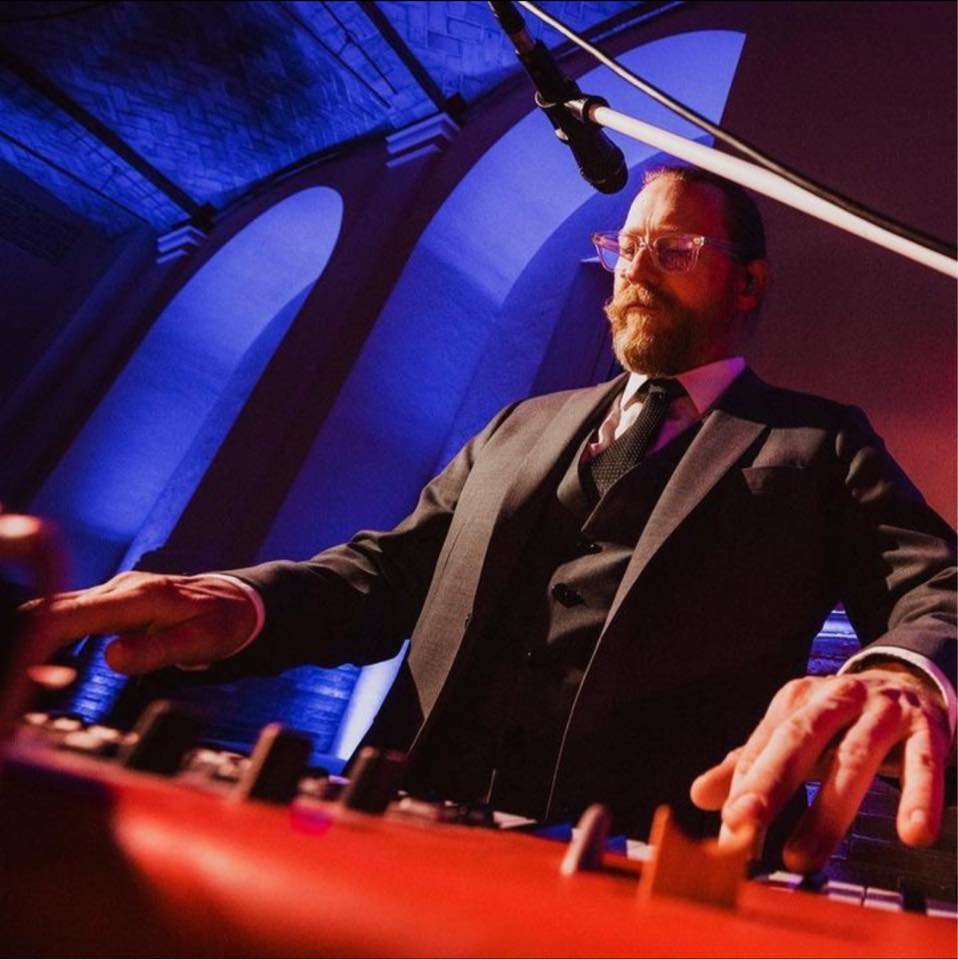
I was 14 years old, sitting at a piano in a country club in Bradford, Pennsylvania, playing jazz standards for a room full of people who were mostly focused on their dinner. My piano teacher had gotten me the gig.
I don’t remember being nervous. What I remember is the check.
That was the moment I knew. Not “I think I can do this”… I knew.
The desire had always been there, but now there was proof. I was a musician because I was being paid to make music, and I was young enough that the idea of it not working out never crossed my mind.
Forty years later, the answer to “am I a musician?” is more complicated than a check. Not because I’m less sure, but because I’ve learned that the question itself is a trap, and that most musicians I know have fallen into it at least once.
The Move That Broke Everything Open
When I relocated from Boulder, Colorado to Boston in my thirties, I was starting completely from scratch.
Boulder is a beautiful place to live, but it doesn’t have an artistic imperative. The weather is too nice. Everyone is outside hiking, including me. It’s hard to build a music career when the mountains are right there and nobody seems particularly hungry.
So I made the move east, because Boston is a genuine music city and I needed to be somewhere that felt like it mattered.
What I didn’t expect was how long it would take to feel like I belonged there. I didn’t know anyone. I was rebuilding my network from zero, trying to get gigs, trying to figure out who I was in a new city. And for a stretch of time that felt much longer than it probably was,
I questioned everything. Not whether I was talented, but whether I counted. Whether I was really a musician or just someone who used to be one somewhere else.
That low-grade imposter feeling is something I’ve talked to enough musicians about to know it’s not unique to me. It just usually goes unspoken, because admitting it feels like confirming the fear.
The Trap the Industry Sets for You
Here’s what I’ve come to understand about that feeling: it’s almost always caused by a definition of “musician” that’s too narrow to survive a career.
When you’re young and hungry, the definition feels obvious. A musician is someone who performs, records, gets booked, gets recognized, and “makes it.” The industry reinforces this constantly, because insecure artists are easier to exploit than grounded ones.
I bought into it early. “Making it” meant everyone knowing your name. That was the metric. And by that metric, most working musicians (including some of the most genuinely talented people I’ve ever shared a stage with) don’t count.
Then I actually met those people. The sidemen and session players. The educators and arrangers and orchestrators and composers whose names you’d never read in a magazine, but whose musicianship would make your jaw drop. These were people who’d spent decades going deeper into their craft, building real careers, living real creative lives, and they were unquestionably musicians. The fame metric wasn’t just narrow. It was wrong.
What the Research Gets Right (And What It Misses)
There’s a growing body of research on the mental health of musicians, and one finding keeps surfacing: musicians experience what researchers call “identity fusion with their work” at rates distinct from other creative jobs.
The combination of career uncertainty, public exposure, irregular income, and the deeply personal nature of musical expression creates a psychological profile unlike most other professions.
When the work goes well, it confirms who you are. When it doesn’t, it doesn’t just feel like failure, but erasure.
What the research is slower to address is what to actually do about it. The clinical answer is usually “set better boundaries” or “diversify your sense of self.” Both true, and neither particularly useful if you’re a musician at 2 AM wondering whether you still count.
The useful answer, in my experience, is this: the definition needs to change before the feeling can.
A Wider Definition
If “musician” only means “person who is currently performing, recording, or being recognized,” then most working musicians fail the test most of the time. That’s an absurd definition, and it’s one worth dismantling deliberately.
Here’s the definition I’ve arrived at after forty years:
A musician is someone for whom music is the organizing principle of their life, how they think, create, communicate, teach, and understand the world.
By that measure, I’ve been a musician every single day since I was a kid, way before I was playing standards in a Bradford country club.
Some of those days I was on a gig. Some of them, I was teaching people how to use Logic Pro. Some of them, I was writing a chapter of a book, coaching a songwriter through a creative block, or ghostwriting something for a client. None of those days was I less of a musician than the others. They were all expressions of the same thing.
Mozart composed from 7 to 9 in the morning, taught music lessons until 1 in the afternoon, spent the afternoon in social and professional circulation, caught performances in the evening, and composed again if he had anything left. He didn’t compartmentalize those activities into “real musician stuff” and “other stuff.” It was all one life. We all know how that turned out.
The Daily Practice of Knowing Who You Are
Here’s something I don’t talk about often, but it’s relevant: with ADHD, my sense of self is largely rooted in the present moment. If I don’t actively remind myself who I am, I’ll drift. The present task becomes the whole world, and the larger identity gets lost.
So at the top of my daily log, I keep a short list. It gets updated as life changes, but right now it reads something like this:
I am a songwriter who finishes songs. A father who shows up calmly. A writer who builds systems. An entrepreneur who works with ADHD.
Reading that every morning isn’t an affirmation in the motivational-poster sense. It’s an anchor. It keeps the identity stable when the output is unreliable, which it always is, for everyone, whether they have ADHD or not.
The system matters more than most musicians want to admit. Not because it produces perfect results every time, but because moving forward is more important than getting it right. You can only get feedback if you produce something, no matter how incomplete or imperfect it feels. Feedback is what makes you better. Stasis is what makes you disappear.
What I’d Tell the Musician in Crisis
If you haven’t finished a song in a year…
If the gigs dried up…
If you’re wondering whether you still count…
Here’s my answer:
If the desire is still inside you, that’s who you are. The desire doesn’t lie. What you do with it is the question.
Make it as simple as possible to take the next step and move something forward, whether it’s writing, teaching, performing, or just sitting down with your instrument for twenty minutes. Getting paid or recognized isn’t what decides it. Your identity, your beliefs, your capabilities, your behaviors, those are what decide it.
And choose your environment carefully. The people around you will either lift you toward the musician you’re trying to be or quietly confirm the fear that you’re not one anymore. That’s not a small thing. I moved across the country partly to find a better environment, and it worked, not immediately, but it worked.
The Forty-Year View
Looking back from 54 to 14, here’s the through-line: performing and teaching have kept me going.
Teaching requires me to keep learning, which makes me a better performer. Songwriting and composing are things I do for love, and since I came of age in the 90s, it has never been harder to monetize songs. Not impossible, just harder. Streaming changed the value of recorded music in ways that still haven’t fully settled. But performing and teaching have remained strong, both as income and as sources of forward motion.
The form of my music career has changed constantly. The identity underneath it has stayed the same: curious, committed to craft, unable to imagine doing anything else.
That identity survived a move to a new city where I didn’t know anyone. It survived years of building an audience from scratch online. It survived the creative blocks, the dry spells, the gigs that went badly, and the projects that never found an audience. It survived because I built it on something wider than any single output.
The check from the country club in Bradford was proof I could do it. Forty years of doing it in every form available to me is proof that the doing never really stops, it just keeps changing shape.
The Question Worth Asking
“Am I still a musician?” is worth asking, but only if you’re willing to interrogate the definition you’re applying.
Most musicians are carrying around a definition given to them by an industry that benefits from their insecurity. The sustainable answer is yours to write, and it probably needs to be wider than what you were taught.
If you’re at one of those inflection points right now, wondering what the next chapter looks like and how to build something that lasts, I’d like to talk.
And if what you need right now is a reliable system for finishing music, not inspiration, not motivation, but an actual method, Speed Songwriting is where to start. If you want to go deeper on your craft and build the kind of tool mastery that makes identity stable, Logic Studio Training is the place.