Here's the thing that actually got me thinking about this.
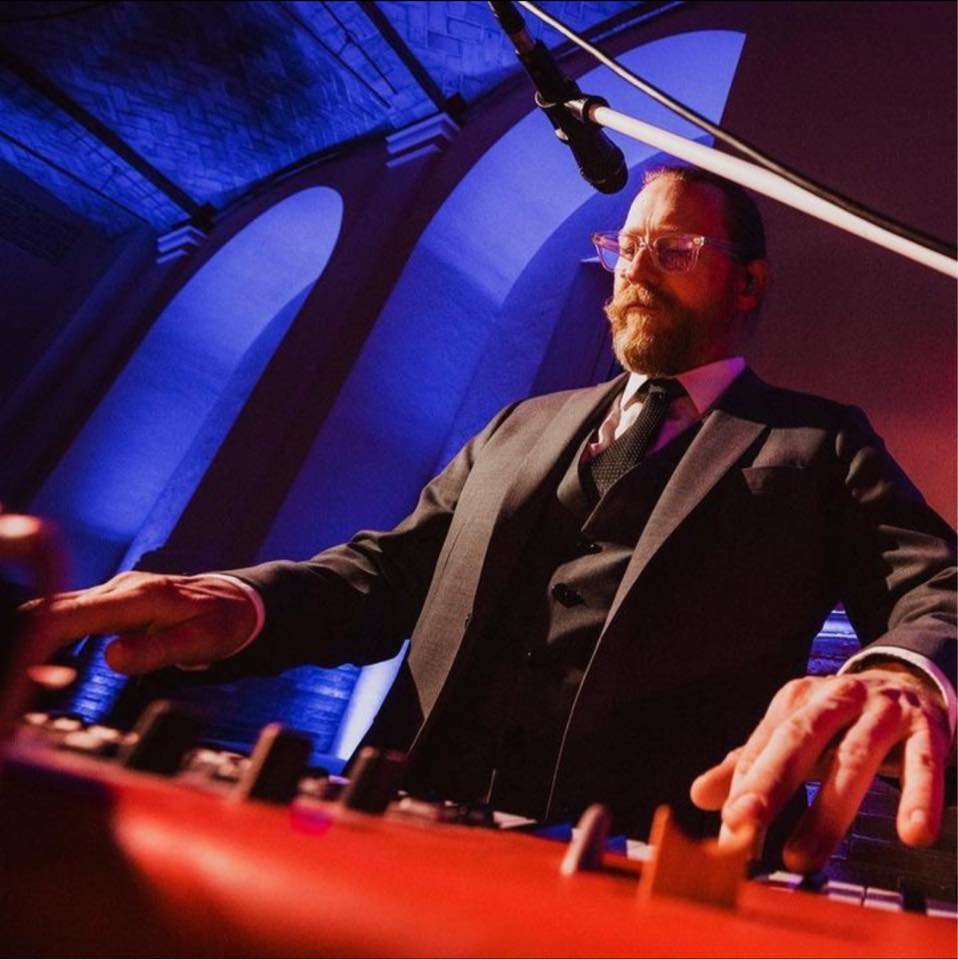
My band, Hot Mess — Boston's best wedding band, and yes, I'm biased, but I'll stand by it — recently picked up a new trumpet player. He's excellent. But we had some notes on the solo section of Earth, Wind & Fire's September. So a band member uploaded our board mix to Suno and had it generate a trumpet solo.
It was shocking. Not bad-shocking. Just... shocking. Clean, musical, and confident. The kind of solo you'd be proud of on a gig.
And look, I've heard AI saxophone solos that might have been better than anything I've ever played (though none of them could touch Grover Washington Jr., and I'll defend that position until I'm in the ground). But that moment with the trumpet solo stuck with me, because it raised a question I keep coming back to: if AI can do that, what exactly is the point of getting good anymore?
I've been in this industry for thirty years. I've watched a lot of technologies arrive with the promise of making musicians obsolete. So I want to give you my honest answer, which is more complicated than either the techno-optimists or the doomsayers are letting on.
We've Seen This Movie Before. But This Sequel Has a Bigger Budget.
The drum machine arrives and drummers are finished. The DAW arrives and you don't need a studio anymore. Auto-tune, streaming, sample libraries... every wave brings the same forecast: human creativity is finished, pack it up, go home.
And every time, the musicians who were actually building something real came out the other side standing. The ones who understood rhythm so deeply that a machine made them better, not redundant. The ones who used the DAW (I wrote the book on Logic Pro, literally) to do things that weren't possible before, rather than just cheaper versions of what was.
So in that sense, yes, we've been here. The pattern holds.
But I want to be careful with the drum machine analogy, because there's something genuinely different this time that deserves honesty. A Roland TR-808 didn't consume the energy of a small nation. It didn't require the kind of infrastructure that quietly tightens its grip on every system it touches — the economy, the military, politics. AI is eating resources at a scale that makes every previous technological disruption look like a rounding error, and anyone making glib comparisons is probably not paying attention to what's happening outside the studio window.
There's a larger conversation here about tech bros, Pentagon contracts, and who ultimately benefits from all of this, and it isn't usually the artist. AI entertains us while the world burns. That's not a small thing to just set aside.
But here's the part that's also true: you can't put the toothpaste back in the tube. So the question becomes what you do with what's in front of you.
What the Marketplace Is Actually Telling Us
I got curious about how AI music was landing in the real world, not in the hype cycle, but in the data. So I went looking. What I found was interesting, and it cuts both ways.
On one hand, AI-generated music is everywhere and growing fast. Nearly half of independent artists have already tried AI tools in their workflow, from mastering to lyric generation to arrangement. The tools are genuinely useful for getting out of your own way when you're stuck.
On the other hand, a 2024 Nielsen analysis found that ads using original human-composed soundtracks achieved 23% higher audience retention and 18% stronger emotional response than AI-generated audio. A 2025 industry survey found that nearly three-quarters of content creators actively prefer to license music from identifiable human composers — not out of nostalgia, but because of creative trust and, increasingly, legal clarity. When you know a human made it, you know what you're dealing with. When AI made it, you're in murkier water.
Which brings me to something that happened while I was running an ad for my Speed Songwriting Video Guide. A comment came in: "No thanks. I use Suno to write songs." I read it, put the phone down, picked it back up about an hour later, and the first thing I saw was a headline about the US Supreme Court declining to hear a challenge to the principle that AI-generated content is not eligible for copyright protection. Creative works must have human authors to receive copyright. Full stop. You can use AI material in your compositions, and if you manipulate it sufficiently you may be able to copyright the resulting work, but not the AI-generated sounds themselves.
So: no thanks, you use Suno to write songs. Good luck owning them.
The Scarcity Paradox (A Gen X Take)
Here's where I'm supposed to tell you that when AI floods the market with "good enough," genuine mastery becomes rare and therefore more valuable, and the cream rises and capitalism rewards excellence and everything works out for the talented and hardworking.
I'm Gen X. I don't entirely believe that.
We've watched the enshitification of basically everything we loved — music discovery, social platforms, streaming royalties, the concept of a middle-class creative career. The market doesn't automatically reward quality. It rewards what gets surfaced by the algorithm, and the algorithm rewards engagement, and engagement rewards whatever makes people feel something fast, whether or not it has any lasting value.
So I'm not going to sell you the clean version of the scarcity story.
What I will say is this: originality is harder to fake than competence, and competence is already being automated. If you've been relying on being technically proficient, the window on that as a differentiator is closing. If you've been building something that couldn't have come from anyone else — a real voice, a real perspective, a body of work that carries the weight of a life being lived — that's harder to commoditize, and the demand for it is real, even if the market is messy about recognizing it.
It's not a guarantee. It's just where your energy is best spent.
What This Means for Your Practice
A few things worth actually doing, rather than just thinking about:
- Find your signature and protect it. The most AI-proof thing you own is the thing only you do — your specific melodic quirk, your unusual chord vocabulary, the way you tell a story. Stop trying to sound like the genre and start trying to sound more like yourself, especially the parts that feel strange or hard to explain. That's not a flaw. That's your moat.
- Build a system for finishing. AI generates fast. The way to stay relevant isn't to generate faster — it's to finish better, with more intention and more of yourself in it. A completed song with a real point of view beats ten AI-assisted sketches that have nothing to say. If you don't have a reliable system for getting from idea to finished work, that's worth fixing. It's what Speed Songwriting is built around — a repeatable method that gets you to done without the perfectionism spiral.
- Know your tools at a level that makes AI useful, not just impressive. The producers who will use AI most effectively are the ones who understand production well enough to know when the output is genuinely useful and when it's plausible-sounding noise. Depth of craft makes you a better collaborator with the technology, not a casualty of it. If you want that kind of depth with Logic Pro, Logic Studio Training is where to start.
- Keep investing in your perspective. Read things unrelated to music. Have opinions about things that aren't gear or theory. Live a life that gives you something to write about. The artist who has genuinely lived something and knows how to express it will always have an edge over an algorithm trained on other people's living.
The Long Game (And Why I'm Not Freaking Out)
I teach people how to write human music. I also teach people how to use AI to augment their talent, and I'd be a hypocrite if I pretended I wasn't doing the same myself.
Here's the honest version: as someone with ADHD, AI has been genuinely transformative in ways I didn't expect. I finally have something like Tony Stark's Jarvis — a fast thinking partner that helps my fast brain actually execute, rather than spin. The ability to externalize thinking, draft quickly, explore ideas at speed and then choose what's actually mine — that's been a real gift.
But more than ever, I need breaks from it. And so does the work. There's a saturation point where the AI stops helping you think and starts thinking instead of you, and you don't always notice when you've crossed it. The center of the work has to stay human — your judgment, your ear, your story, your choices. AI at the edges is a force multiplier. AI at the center is a slow vacancy.
Use it at the edges. Keep the center yours.
What I Told My Friend
He asked if the Suno trumpet solo worried me.
I told him the truth, which is: yes, we're a little fucked. Anyone who tells you otherwise is either selling something or not paying attention. The scale of this thing, the speed of it, the way it's being deployed by people with interests that have nothing to do with music — it's a lot.
But we're also human. And that still means something, even if the market is confused about it at the moment.
Humanity remains supreme... at making art that comes from experience, at connecting with other humans through that art, at meaning something to someone at 2 AM when they need a song that sounds like their life. AI doesn't have a life. It has our lives, fed back to us as a reflection.
The question was never whether it was coming. It's here.
The question is what you're building at the center, while AI handles the edges.
Make it irreplaceable. Make it yours.
Graham English is a musician, educator, ghostwriter, and the best-selling author of Logic Pro For Dummies. He helps creative professionals and brands turn expertise into influence — with rhythm, structure, and soul. If you want to build a voice that's genuinely yours — as an artist, an educator, or a brand — let's talk.
Check out Hot Mess, Boston's best wedding band. We still have a human trumpet player.